 On the itinerary of my most recent recruiting trip to the Middle East was a stop in Oman, a visit originally scheduled for last June but canceled due to the devastating effects of Cyclone Gonu.
Muscat, the capital, is a beautiful, ornate, modern city literally cut into and in between mountains, and bordered by the picturesque coastline provided by the Gulf of Oman. Our visit was centered on a meeting with HE Dr. Abdullah Al Sami, the Undersecretary in the Ministry of Higher Education who I knew had gone to the United States for his PhD.
I was ushered into a comfortable, understated office decorated in a classic Omani style by a number of articulate and obviously well-educated staffers dressed in dishdashas--simple, ankle-length, collarless gowns with long sleeves--the traditional dress of Omanis.
After the coffee was poured we launched into the small talk that builds the trust and relationships necessary to get down to business. Then I was hit with a bombshell. Dr. Al Sami proceeded to tell me that he got his doctorate at the University of Pittsburgh, took classes at Carnegie Mellon's Heinz School of Public Policy and Management, and, most amazingly, was a Pittsburgh Steelers fan! 
Now, I know that U.S. football (called gridiron here in Australia) is popular around the world, not just among expats but the millions who watch the Super Bowl every year. And the Steelers are one of the league's most popular teams because of its "blue collar" work ethic and winning history. But I certainly didn't expect to find a fellow Steelers fan in the heart of the Gulf, with a backdrop dripping with all the beauty and tradition of the region.
 Back in October, I participated as a “World Thinker” at a remarkable conference
 held every two years in the United Arab Emirates called the Festival of Thinkers. Past Nobel Award laureates and mere mortals like me get to mingle with experts in areas such as poverty alleviation, health care, entrepreneurship, education, and the media.
More importantly, for the event’s host, Sheik Nahayan Mabarak Al Nahayan, Minister of Higher Education and Scientific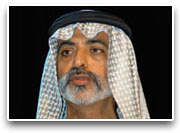 Research and Chancellor of the UAE’s Higher Colleges of Technology, the conference gave literally hundreds of university-level students from across the Gulf States an opportunity to interact directly with the many global luminaries during breakout sessions and public lectures, some of which were moderated by the students themselves.
Imagine my surprise on the first day when, in a working session that I was leading, a very bright and opinionated woman from Kuwait got into a protracted argument with one of the Nobel laureates over climate change which then spilled over into discussing the tradeoff between actively limiting the world’s population and supporting the rights of women to make their own choices. At one point, he glanced over at me with a look that said “a little help here!” mixed with clear amusement, surprise, and admiration.
Later in the conference, I was having lunch with Michael Goodwin, the Pulitzer Prize-winning journalist from the New York Daily News. He and I were talking about how much Dubai had changed in such a short time and he said, “If there was a sign for this region, it would say ‘Wet Paint’.”
His comment made be think (which is the best kind of comment!). The skyline of Dubai isn’t the only thing that seems to change every day. There’s “wet paint” everywhere you look. And the real revolution going on in the Gulf doesn’t have anything to do with armed conflict. Sure, to the naked eye, it has everything to do with the amazing transformation a place that, just a generation ago, was largely inhabited by Bedouins living in tents. Supposedly 25% of all the world’s construction cranes are in Dubai. 
No, the real and lasting revolution is focused on education. This ancient seat of innovation, learning, and discovery is on a quest to recapture its leading position in the world. Sixteen thousand students are enrolled in the UAE’s Higher Colleges of Technology alone, mostly women, in fields ranging from electrical engineering to computer science to finance. Hundreds of students are getting full scholarships every year to study abroad, preferably at universities in the United States but quickly shifting to places like Australia that are considered safer and more inviting. Their facilities are world class, using technology to merely augment the overall student experience.
I make no apologies for wanting to attract top students from the region to the Heinz School’s campuses in the U.S. and Australia. Who wouldn’t want to support a new generation of emerging leaders determined to keep their paintbrushes wide and wet?
 On the itinerary of my most recent recruiting trip to the Middle East was a stop in Oman, a visit originally scheduled for last June but canceled due to the devastating effects of Cyclone Gonu.


